
How Often Should a Baby Be Weighed? Pediatric Visit Guide
Babies are weighed at every well-child visit, but how often is that — and when should you weigh them between visits? Here's the AAP schedule with what to expect at each checkup.
 Srivishnu RamakrishnanApril 9, 20268 min read
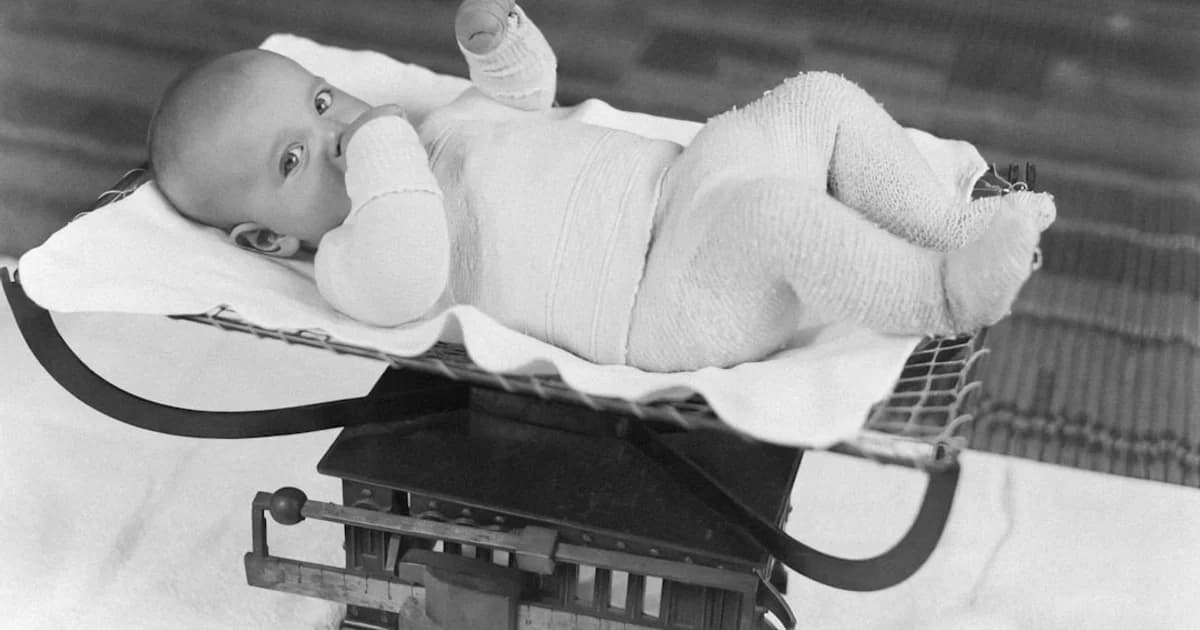
Every new parent knows the drill: strip the baby down, place them on the crinkly paper of the exam table scale, and wait for the numbers. But outside of well-child visits, most parents aren't sure how often their baby should actually be weighed — or why it's done so frequently in the early months.
Here's the full schedule, what gets measured at each visit, and the warning signs that warrant an extra weight check.
The AAP Well-Child Visit Schedule
The American Academy of Pediatrics publishes a recommended schedule for preventive care visits in the first 5 years. Every single visit includes a weight check — because weight is the most sensitive early indicator of how well a baby is feeding, absorbing nutrients, and growing. If you want to share that data meaningfully with your care team, sharing baby growth data with your doctor covers what to track and how to present it.
| Visit | Age | Key Measurements | Growth Focus |
|---|---|---|---|
| Newborn | 3–5 days | Weight, length, head circumference | Birth weight recovery check |
| 1-month | 4 weeks | Weight, length, head circumference | Early feeding adequacy |
| 2-month | 8 weeks | Weight, length, head circumference | Establishing growth curve |
| 4-month | 16 weeks | Weight, length, head circumference | Peak weight gain velocity |
| 6-month | 6 months | Weight, length, head circumference | Growth deceleration check |
| 9-month | 9 months | Weight, length | Sitting/standing growth patterns |
| 12-month | 1 year | Weight, length, head circumference | Triple weight check milestone |
| 15-month | 15 months | Weight, height | Toddler growth tracking begins |
| 18-month | 18 months | Weight, height | BMI-for-age first calculated |
| 24-month | 2 years | Weight, height | Switch to CDC chart at this visit |
Source: AAP Bright Futures Periodicity Schedule, 2023

GrowthKit · Free for iPhone
Track every milestone, instantly.
The 3–5 day newborn visit is particularly important: most babies lose 5–10% of birth weight in the first few days as fluid shifts occur. This visit confirms the loss is within acceptable bounds (under 10% for formula-fed, under 7–10% for breastfed babies) and that weight is beginning to recover.
What "Weight Check" Actually Involves
At each visit, your baby is weighed undressed (or in just a dry diaper) on a calibrated infant scale accurate to 10–20 grams. The weight is plotted on a WHO growth chart (for under 2s) alongside all previous measurements.
Pediatricians assess three things:
- Current percentile: Where does this measurement fall compared to peers?
- Trend: Is the baby tracking along their own established curve?
- Velocity: How many grams per day have they gained since the last visit?
Velocity is often more informative than percentile in the early months. A baby born at the 10th percentile who gains 25 grams/day is thriving. A baby who was born at the 60th percentile but gained only 8 grams/day is worth investigating — even if they still look "normal" on the chart.
Expected Weight Gain Between Visits
| Age Period | Expected Daily Gain | Expected Gain Per Visit Interval |
|---|---|---|
| Birth → 3 months | 25–35 g/day | ~900–1,000 g/month |
| 3 → 6 months | 15–21 g/day | ~450–640 g/month |
| 6 → 9 months | 10–13 g/day | ~280–390 g/month |
| 9 → 12 months | 8–10 g/day | ~240–300 g/month |
| 12 → 18 months | 6–8 g/day | ~180–240 g/month |
| 18 → 24 months | 5–7 g/day | ~150–210 g/month |
Source: WHO Child Growth Standards velocity data; Fomon, Nutrition of Normal Infants
These are averages. Individual variation is substantial. A baby who consistently gains at the lower end of the range but has always done so is growing normally; sudden deceleration below their personal baseline is more meaningful than absolute daily gram counts.
Baby Weight Growth Velocity Calculator
Calculate your baby's daily weight gain rate between two measurements and compare it to WHO velocity standards.
When Extra Weight Checks Are Warranted
The routine schedule assumes your baby is healthy and gaining well. Extra weight checks are appropriate if:
For newborns and young infants:
- Birth weight loss exceeds 10% (formula-fed) or 7% (breastfed)
- Birth weight not fully recovered by 2 weeks
- Breastfeeding challenges, insufficient milk supply concerns, or poor latch
- Premature birth or NICU discharge
For older infants:
- Dropping more than two major percentile lines (e.g., 75th to 25th) over any 2-visit period
- Illness with poor oral intake lasting more than 5–7 days
- Parental concern about feeding adequacy
- Starting solid foods with significant refusal
For toddlers:
- BMI-for-age trending below 5th percentile
- Persistent picky eating affecting growth curve
- Diagnosis requiring dietary management (celiac, FPIES, allergies)
Most practices will weigh your child as a brief nurse visit without a full well-child appointment fee — just call and ask.
How to Weigh a Baby at Home
If your pediatrician recommends more frequent monitoring, or if you're breastfeeding and want reassurance, our guide on how to track baby weight at home covers the method in full detail. Understanding healthy baby weight gain rates by age also helps you know what "good progress" looks like between visits.
- Use an infant scale, not a bathroom scale. Platform infant scales (the kind NICU-grade scales) weigh to 10–20 grams. Adult scales are accurate only to ~100–200 grams — too imprecise for infant tracking.
- Weigh at the same time each day: first thing in the morning, before feeds, after a wet diaper change.
- Don't weigh more than once a day. Day-to-day noise is normal — weight fluctuates by 50–150 grams with feeds and bowel movements. Trends over 5–7 days matter more than a single reading.
- Record and plot, not just memorize. A number means little without context of the previous measurement.
After Age 2: Less Frequent, But Still Important
From age 2 onward, the AAP moves to annual well-child visits. Weight and height are still measured at every visit, and BMI-for-age is calculated. The frequency drops because most catch-up and critical brain growth periods are complete, and growth becomes more predictable. Questions to ask at your well-child visit can help you make the most of those less-frequent appointments.
The visits at age 3, 4, and 5 continue the transition from WHO to CDC charts and add vision and hearing screenings as standards.
Baby Weight Percentile Calculator
Plot your baby's weight on WHO growth charts and track percentile trends across all your well-child visits.
Frequently Asked Questions
How often does the AAP recommend well-child visits in the first year?
The American Academy of Pediatrics recommends well-child visits at: 3–5 days after birth, then at 1, 2, 4, 6, 9, and 12 months. That's 6 visits in the first year. Each visit includes a weight check, length measurement, and head circumference measurement.
Can I weigh my baby at home between visits?
Yes, especially if your baby is premature, had early weight concerns, or you're breastfeeding and worried about intake. Use a dedicated infant scale accurate to 10–20 grams, not a bathroom scale. That said, weekly or twice-weekly home weighing is generally only necessary if your pediatrician recommends closer monitoring.
How much should a baby gain between 2-month visits?
Between 2-month well-child visits, a baby typically gains 800–1,400 grams (about 1.7–3 lbs). The expected rate slows as babies get older: 150–200 grams/week in the first 3 months, 100–150 grams/week from 3–6 months, and around 70–100 grams/week from 6–12 months.
What if my baby hasn't regained birth weight by the 2-week check?
The 2-week visit isn't an official AAP well-child visit, but many practices schedule it specifically to check that birth weight has been regained (expected by 10–14 days). If birth weight hasn't been recovered, your pediatrician will likely increase the frequency of weight checks and may recommend supplementation.
Medical Disclaimer
This article is for informational purposes only and does not constitute medical advice. Always consult your child's pediatrician or a qualified healthcare provider for any health-related concerns.Free Tools
Free Tools