
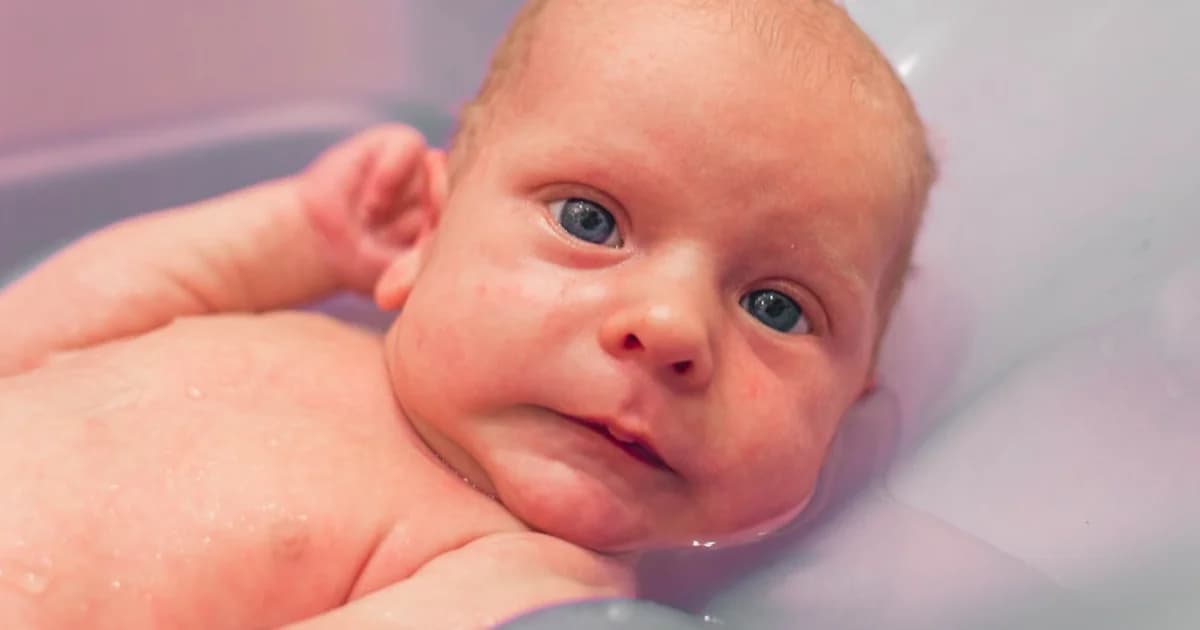
Baby's First Bath: How to Bathe a Newborn Safely
Bathing a slippery newborn for the first time can feel terrifying. This step-by-step guide covers timing, technique, water temperature, and everything you need to keep your baby safe and calm.
 Srivishnu RamakrishnanApril 9, 20268 min read
Bathing your baby for the first time is one of those moments that feels impossibly delicate. They're wet, slippery, they can't hold their own head up, and they have strong opinions about water temperature. The good news: with the right setup and technique, newborn bathing is straightforward, and most babies come to love it within the first few weeks.
Before the First Bath: Timing and Preparation
When to give the first bath: The World Health Organization recommends waiting at least 24 hours after birth before bathing. The reason: newborns are born with vernix caseosa — a waxy, white protective coating that serves as a moisturizer, temperature regulator, and antimicrobial barrier. Early bathing also disrupts temperature regulation and blood sugar stability in the first hours of life. Many hospitals now delay bathing as routine practice.
Sponge baths until the cord falls off: Do not submerge your baby in water until the umbilical cord stump falls off and the area is fully healed. This typically takes 1–3 weeks. Until then, sponge baths are the safe method.
Setting Up for Success
Gather everything before you undress your baby — once they're wet and cold, you can't step away. You'll need:
- Basin or infant tub filled with 2–3 inches of warm water (98–100°F / 37–38°C)
- Soft washcloth (two is helpful — one for the body, one for the face)
- Gentle, fragrance-free baby wash or just warm water
- Clean diaper, clothing, and a dry towel ready nearby
- Non-slip surface or bath insert to keep baby secure

GrowthKit · Free for iPhone
Track every milestone, instantly.
Step-by-Step: How to Give a Sponge Bath
Step 1: Keep most of the baby covered. Use a warm towel or blanket to wrap the parts you're not washing. Babies lose heat quickly and start crying when cold.
Step 2: Start with the face. Use plain warm water — no soap. Wipe each eye from inner corner to outer corner using a fresh area of the cloth. Clean around the nose and mouth. Don't try to clean inside the nostrils or ears.
Step 3: Clean the scalp. Cradle your baby in a football hold over the basin. Wet the scalp, apply a tiny dab of fragrance-free baby shampoo if desired, and rinse using your cupped hand or a small cup. Dry the head immediately — wet heads cause rapid heat loss.
Step 4: Neck and chest. Gently clean the neck folds where milk accumulates. Wipe chest and abdomen.
Step 5: Arms and legs. Pay attention to creases in the armpits and elbow bends.
Step 6: Diaper area last. Clean front-to-back for girls. For boys, clean around (not under) the foreskin if intact; clean the penis as normal.
Step-by-Step: Full Tub Bath (After Cord Falls Off)
Once your baby's belly button has healed, you can use an infant tub or basin.
| Step | Action | Key Point |
|---|---|---|
| 1. Check water | Test temp on inner wrist (98–100°F) | Fill 2–3 inches only — no deeper |
| 2. Undress baby | Remove everything including diaper | Keep room warm (at least 68°F / 20°C) |
| 3. Lower in gently | Support head and neck with one hand, lower bottom-first | Speak calmly; maintain eye contact |
| 4. Clean face first | Plain warm water, no soap | Front corner to back corner for each eye |
| 5. Shampoo scalp | Rub tiny amount in, rinse with cupped water | Support head, keep water from face |
| 6. Wash body front | Fragrance-free wash, gentle circles | Don't forget neck and armpit folds |
| 7. Lift, support neck | One hand under head, one under bottom | Baby will be slippery — firm grip |
| 8. Dry thoroughly | Pat with warm towel immediately | Cover head first to prevent heat loss |
| 9. Moisturize if needed | Fragrance-free lotion while skin is slightly damp | Not needed for all babies |
Source: AAP HealthyChildren.org newborn care guidance
Water Temperature Safety
Scalds from bath water are one of the most common childhood injuries. Newborn skin burns at lower temperatures and more quickly than adult skin.
| Temperature | Feel | Safe for Baby? |
|---|---|---|
| Below 90°F (32°C) | Cool | No — causes distress and heat loss |
| 90–97°F (32–36°C) | Slightly warm | Acceptable but not ideal |
| 98–100°F (37–38°C) | Comfortably warm on inner wrist | Ideal temperature |
| 101–104°F (38–40°C) | Hot on inner wrist | Too hot — risk of scalding |
| Above 104°F (40°C) | Very hot | Dangerous — will scald quickly |
Source: AAP injury prevention guidance
How Often Do Babies Need Baths?
Newborns (0–6 weeks): Sponge bath 2–3 times per week. No more is needed — overbathing dries newborn skin.
2–6 months: 2–3 full tub baths per week, or more if desired. Daily face, neck, hand, and diaper area cleaning.
6–12 months: Baths can become daily once solids are introduced, since mealtimes produce genuine mess. Use fragrance-free product.
Toddlers 1+: Daily or every other day bath fine; use minimal amount of wash.
Umbilical Cord Stump Care
- Keep the stump dry — this is the most important rule
- Fold the diaper down below the stump to avoid rubbing
- Do not apply alcohol, petroleum jelly, or any product unless directed by your doctor (alcohol was previously routine but is no longer recommended)
- Allow the stump to fall off naturally — do not pull it even if it appears ready
- The area may have a small amount of dried blood or tissue when it falls off; this is normal
- See your doctor if the stump area is red, warm, has pus, or smells foul (signs of omphalitis, a rare infection)
Bath Products: Keep It Simple
Newborn skin doesn't need much. A few principles:
- Plain warm water is adequate for the first few weeks, especially for the face
- Fragrance-free, tear-free baby wash for body once you want a product — baby skin care products that are safe covers what to look for on ingredient labels
- No bubble baths — these disrupt the skin barrier and increase UTI risk in girls
- Avoid fragranced soaps and adult products — they contain surfactants and fragrances inappropriate for infant skin
The bath can become a calming ritual for your baby and a special bonding time for you. Most babies who start out hating baths learn to love them within the first couple of months — especially the warm water and the undivided attention. A consistent bath time is also one of the easiest anchors in a daily routine for baby.
Frequently Asked Questions
When can I give a newborn their first bath?
The World Health Organization recommends waiting at least 24 hours after birth before the first bath, and the AAP supports waiting longer — up to 48 hours. Immediate bathing removes vernix (the protective coating) and can cause temperature instability and blood sugar drops. Many hospitals now delay the first bath as standard practice.
How do I know if the bath water is the right temperature for my baby?
The water should feel warm but not hot on the inside of your wrist or elbow — approximately 98–100°F (37–38°C). Use a bath thermometer if you want to be precise. Cold water is distressing, and hot water can scald newborn skin very quickly. Always test temperature before putting your baby in.
How often should I bathe my newborn?
Two to three times per week is adequate for newborns. Daily baths are not recommended — they strip the natural oils from baby's skin and can worsen dryness and eczema. The diaper area, face, neck folds, and hands should be cleaned daily, but full immersion baths are not needed daily.
What should I do about the umbilical cord during baths?
Until the umbilical cord stump falls off (typically 1–3 weeks after birth), give sponge baths only — do not submerge the cord in water. After the cord falls off and the belly button has fully healed, you can give regular tub baths. Keep the stump dry and let it fall off naturally; do not pull it.
Medical Disclaimer
This article is for informational purposes only and does not constitute medical advice. Always consult your child's pediatrician or a qualified healthcare provider for any health-related concerns.