
When to Start Solid Foods: Signs of Readiness and What to Try First
Learn when to start solids for your baby — the AAP guidelines, signs of readiness, what foods to introduce first, and the key safety rules every parent needs to know.
 Srivishnu RamakrishnanApril 4, 20269 min read
You're at the 4-month well visit and the pediatrician says "think about solids around 6 months" — and suddenly that feels simultaneously very far away and alarmingly close. Starting solids is one of the bigger milestones of the first year, and the guidance has evolved considerably over the past decade.
Here's everything you need to know — including the signs that actually matter, what the first foods should be, and the safety rules that are non-negotiable.
When to Start: The Official Guidance
The current consensus from the American Academy of Pediatrics (AAP), the WHO, and major international bodies:
- Start around 6 months of age
- Never before 4 months (the gut isn't ready and the risk of harm is real)
- By 7 months at the latest for typically developing babies
The shift from "4–6 months" to "around 6 months" in AAP guidance (updated 2022) reflects evidence that waiting until 6 months provides better gut maturity, stronger head control, and improved swallowing coordination.
Signs of Readiness: All Three Must Be Present
Starting solids is about developmental readiness, not calendar age. Your baby should show all three of these signs before you begin:
| Sign | What it looks like | Why it matters |
|---|---|---|
| Head and neck control | Holds head steady and upright without support | Safe swallowing requires head stability |
| Sitting with minimal support | Can sit in a high chair or supported seat | Upright position prevents choking |
| Loss of tongue-thrust reflex | Doesn't automatically push food out with tongue | The tongue-thrust reflex protects newborns — when it fades, swallowing solids becomes possible |
| Interest in food | Watches food, reaches toward it, opens mouth when they see you eating | Developmental curiosity that signals readiness |

GrowthKit · Free for iPhone
Track every milestone, instantly.
First Foods to Introduce
The goal in the first few weeks is exposure and exploration, not nutrition. Calories still come primarily from breast milk or formula.
Good starting foods (pureed or well-mashed):
| Category | Examples | Notes |
|---|---|---|
| Iron-rich (prioritise these) | Pureed meats, iron-fortified baby cereal, pureed lentils | Iron needs increase significantly at 6 months |
| Root vegetables | Sweet potato, butternut squash, carrot, parsnip | Naturally sweet, smooth texture |
| Fruits | Pureed apple, pear, peach, banana | Easy acceptance, but don't lead with these |
| Grains | Pureed oats, rice, barley | Fortified varieties boost iron intake |
What to avoid under 12 months:
- Honey — risk of infant botulism (serious, potentially fatal)
- Cow's milk as a drink — fine as an ingredient in cooking, but not as a main drink until 12 months
- Whole grapes, nuts, large chunks of raw vegetable — choking hazards
- Added salt and sugar — kidneys and palates don't need them
- Low-fat foods — babies need dietary fat for brain development
Introducing Allergens Early (The Evidence Has Changed)
For many years, parents were told to delay introducing allergenic foods like peanut, egg, and tree nuts. The LEAP study (2015) fundamentally changed this guidance: early introduction of allergens, around 6 months, significantly reduces the risk of food allergy.
The top allergens to introduce early:
- Peanut (as thinned peanut butter — never whole nuts)
- Egg (well-cooked initially)
- Tree nuts (thinned nut butters)
- Fish and shellfish
- Wheat
- Soy
- Sesame
Allergen Introduction Schedule
Get a personalised schedule for introducing the top allergens in the right order and at the right age.
How to Actually Do the First Feed
You've chosen a food (sweet potato puree is a classic). Here's the practical setup:
- Time it right — mid-morning after a milk feed works well. Your baby isn't starving (that leads to frustration) but is alert (not sleepy)
- Use a spoon — even for baby-led weaning, a soft spoon for initial purees is easiest
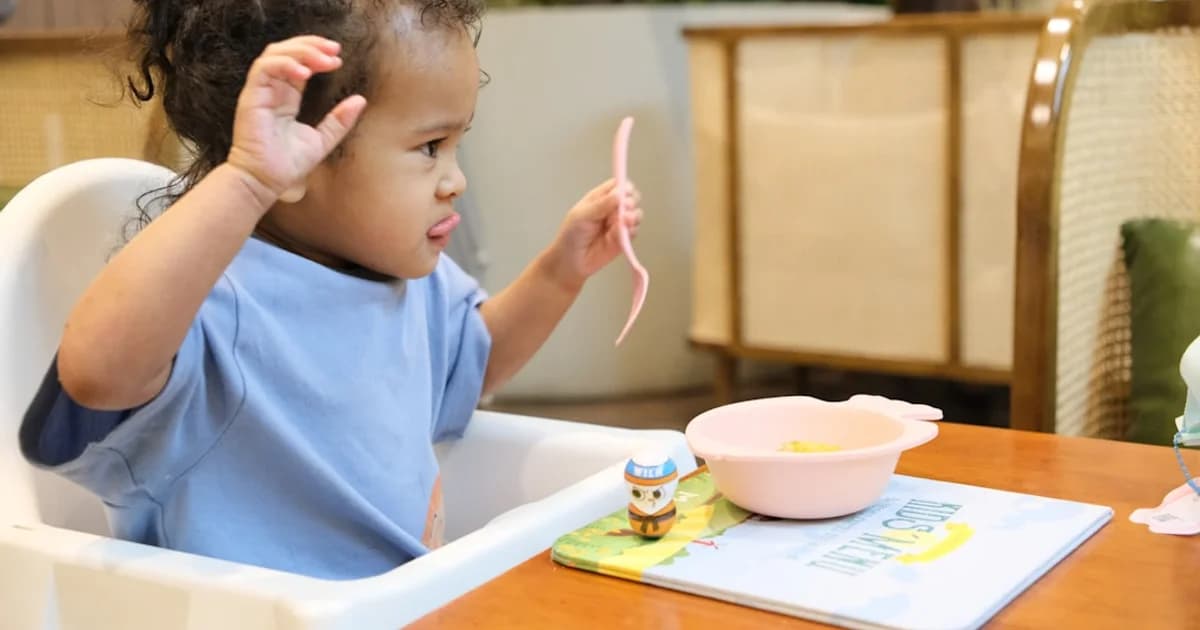
- Expect mess and refusal — most babies push food back out the first several attempts. This is normal, not rejection
- Watch the 'division of responsibility' — your job is to offer; your baby's job is to decide how much
- One new food at a time for allergens; two to three days is adequate between new items
The look on your baby's face the first time they taste something truly different is worth being present for.
Progressing from Puree to Finger Foods
The progression over the first 3–6 months of solids:
| Stage | Age | Texture | Examples |
|---|---|---|---|
| Stage 1 | 6 months | Smooth, thin purees | Single-ingredient purees |
| Stage 2 | 7–8 months | Thicker, lumpier | Mixed purees, mashed foods |
| Stage 3 | 8–9 months | Soft lumps + early finger foods | Soft-cooked vegetables, banana pieces |
| Stage 4 | 9–12 months | Finger foods, family foods | Soft diced foods, strips of soft protein |
When Starting Solids Doesn't Go Smoothly
A few common situations and what they usually mean:
My baby spits everything out — usually normal, especially in weeks 1–3. The tongue-thrust reflex takes time to completely disappear. Keep offering.
My baby gags at every meal — normal initially, should reduce significantly by 7–8 months as oral coordination develops. If it persists beyond 8 months, mention it to your pediatrician (oral motor therapy is sometimes helpful).
My baby refuses all textures after purees — texture aversion can develop if the puree stage is prolonged too long. Introducing lumps and soft pieces early (by 7–8 months) prevents texture fixation.
My baby ate well then suddenly refused everything — a common pattern around 9–12 months and the toddler years. Food neophobia (fear of new foods) is developmentally normal. Keep offering, keep mealtimes positive. For a deeper explanation of that appetite shift, why toddlers stop eating covers the biology.
Baby Daily Routine Builder
Build a daily feed-play-sleep-meal schedule that adapts as your baby transitions from milk to solids.
Source: AAP policy statement on complementary feeding, Pediatrics 2012 (reaffirmed 2023); WHO complementary feeding guidelines
Frequently Asked Questions
Can I start solids before 6 months?
The AAP, WHO, and most major pediatric bodies recommend waiting until around 6 months, and not before 4 months under any circumstances. The few exceptions (premature babies with adjusted age, specific medical situations) should be guided by your pediatrician. The digestive and immune systems are not ready before 4 months — early introduction increases allergy and obesity risk.
What's the very first food I should introduce?
There's no single 'correct' first food. Many families start with single-grain iron-fortified rice cereal, pureed vegetables, or pureed fruit. The AAP recommends prioritizing iron-rich foods (meat, iron-fortified cereals, legumes) since breast milk alone doesn't provide enough iron after 6 months. Beyond that, order doesn't matter much — variety does.
Should I introduce one food at a time?
The traditional 'one new food every 3–5 days' rule exists mainly to identify allergic reactions. The most current guidance relaxes this somewhat — you don't need to wait 5 days for every single food. However, introducing each new common allergen (peanut, egg, tree nuts, fish) separately with 1–3 days in between is still sensible practice.
My 5.5-month-old seems ready — is it okay to start then?
Readiness signs can appear before 6 months, but the recommended age is 'around 6 months' for good reason. If your baby shows all readiness signs at 5.5 months, discuss it with your pediatrician. Starting a week or two early is generally not harmful, but earlier than 4 months is firmly not recommended.
Do babies need teeth to start solids?
No. Babies don't need teeth to eat soft purees or even many finger foods. Their gums are surprisingly effective at mashing soft foods. Teeth typically arrive between 4–10 months — waiting for them before starting solids would delay nutrition unnecessarily.
Medical Disclaimer
This article is for informational purposes only and does not constitute medical advice. Always consult your child's pediatrician or a qualified healthcare provider for any health-related concerns.Free Tools
Free Tools